
PROJECT CONSULTING / DECOMMISSIONING
Decommissioning Deep Dive: Navigating a Live Manufacturing Environment
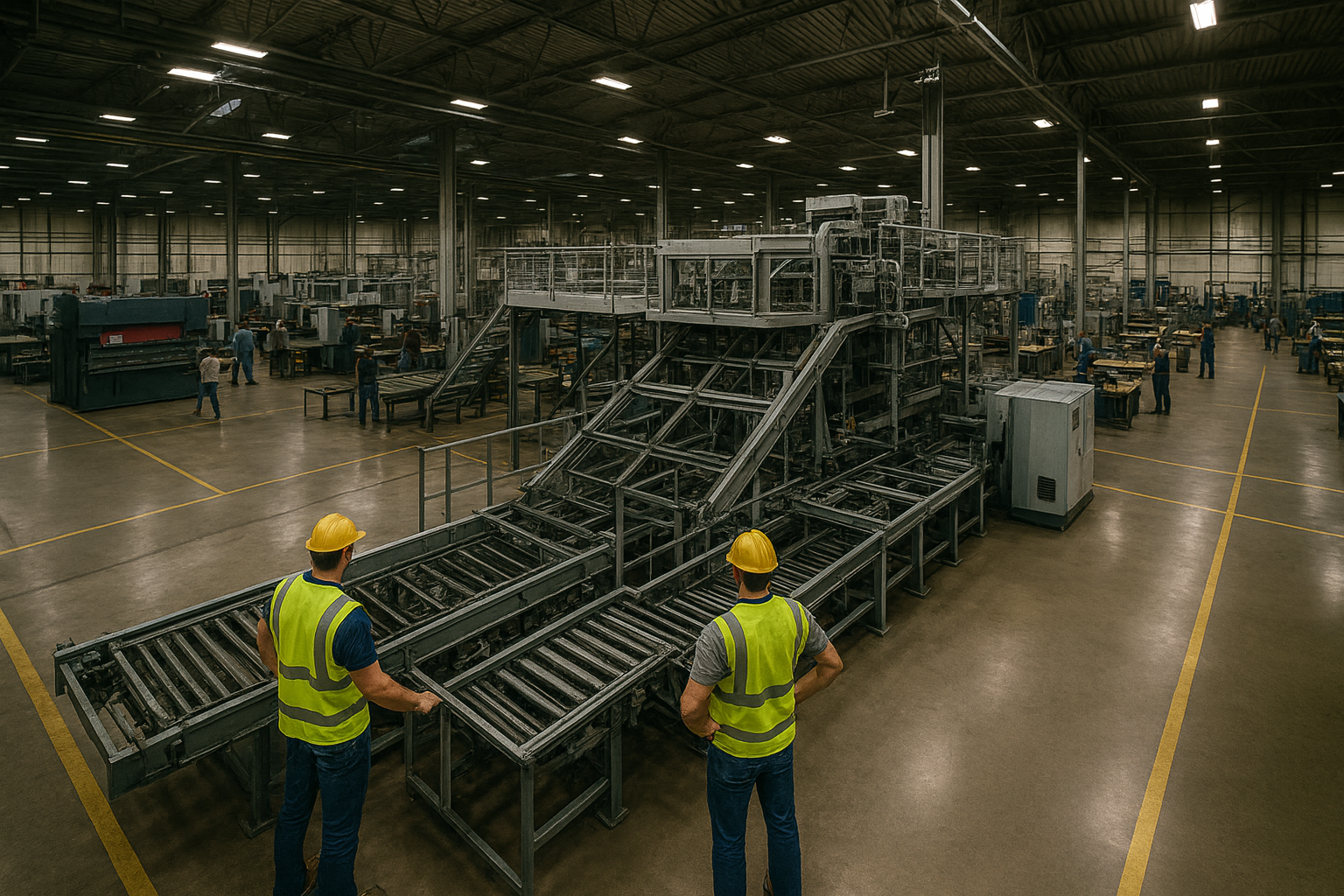
Taking a complex, multi-stage industrial system—like a semi-automated paint line with its associated ovens, air movers, and robotics—offline is not just a move; it's a live environment surgery. Failure to manage the transition perfectly guarantees a costly plant-wide impact.
Versa Novus specializes in the comprehensive planning required to ensure zero operational interference by mastering four critical domains of decommissioning.
1. Comprehensive Risk Isolation: Beyond Electrical LOTO
The primary safety task is establishing a complete Lockout/Tagout (LOTO) perimeter, which goes far beyond disconnecting a power switch. We audit all forms of stored and active energy sources.
The Full Spectrum of LOTO Energy Sources
Effective decommissioning requires isolating every source, ensuring the adjacent manufacturing cells remain operational and safe. These energy sources must all be accounted for in the LOTO procedure:
Energy Source
Electrical
Description and Examples
Energy from power lines, circuits, and stored in capacitors.
Energy Source
Mechanical
Description and Examples
Energy from moving parts like rotating flywheels, gears, and belts.
Energy Source
Hydraulic & Pneumatic
Description and Examples
Energy from pressurized liquids or air in hydraulic and pneumatic systems.
Energy Source
Chemical
Description and Examples
Energy from hazardous chemicals, acids, or gases (paint/solvents).
Energy Source
Thermal
Description and Examples
Energy from hot or cold surfaces or liquids, such as steam lines or cryogenic fluids (e.g., ovens/cooling rooms).
Energy Source
Gravitational
Description and Examples
Stored energy from objects that are elevated, such as raised lifts or overhead conveyors.
Managing Fire Suppression Disconnection
A critical consideration is the fire suppression system, which often lacks local isolation valves near the decommissioning line. Our plan must account for:
- Coordinating the shutdown and draining of a wider sprinkler zone.
- Implementing dedicated 24/7 fire watch protocols during the shutdown to mitigate insurance risk and maintain facility safety integrity.
2. Interior Dismantlement & High-Reach Logistics
The physical teardown must be sequenced to maintain structural integrity while navigating the complex geography of an active factory floor.
Coordinating High-Reach Equipment Movement
Removing components requires specialized machinery like forklifts, scissor lifts, and telehandlers. We provide the strategy to manage their movement in tight areas, ensuring:
- Pathway Scheduling: Equipment movement does not interfere with material flow or production activities in adjacent areas.
- Floor Load Analysis: Ensuring heavy equipment and disassembled components do not exceed floor load limits.
Managing Overhead Ductwork Dismantlement
Removing large ductwork (like 3-foot diameter lines) and air handling units 30 feet in the air is a high-risk operation. We plan the sequential cutting and securing of these components and manage the safe deployment of rigging teams and high-reach equipment.
3. Asset Protection and Custom Packaging for Transit
The financial value of the system often lies in its sensitive electronics and mechanics. We create a strategy for protecting high-value components before transit.
Fragile Components Strategy
Components like Robotic Paint Sprayers, PLCs, industrial computers, and electronics must be treated differently than structural steel. Our plans include:
- Specialized technicians for electronic disconnection.
- Shock-absorbent, anti-static crating to protect against vibration and static discharge.
Cribbing and Pallet Manufacturing
Large or awkwardly shaped components require custom solutions. We coordinate the onsite manufacturing of custom wooden pallets and cribbing (support structures) to ensure heavy components are stabilized and can be lifted safely without damaging sensitive mounting points during loading and transit.
4. Forward Storage and Transit Strategy
The final challenge is optimizing the removal and storage chain, which hinges on a crucial decision: renting trailers versus buying shipping containers, and optimizing loading time.
Trailers vs. Containers (Long-Term Storage)
For long-term storage (e.g., about a year), purchasing shipping containers often proves the most cost-effective and secure solution, turning the storage expense into a usable asset.
Live Loading vs. Drop-and-Pick Logistics
The efficiency of loading directly impacts factory operations. Drop-and-Pick (empty trailers or containers are dropped for multi-day loading) is the standard recommendation for complex, multi-day decommissioning to eliminate high driver wait fees and prioritize safe, quality loading.
Conclusion: Expertise That Keeps You Running
Successfully decommissioning a multi-component system within an operating facility is a logistical, engineering, and safety challenge that demands expertise far beyond standard movers. Versa Novus provides the comprehensive consulting necessary to manage the entire lifecycle—from LOTO planning and fire suppression isolation to specialized crating and final transport—allowing our clients to focus on running their business, not managing the disruption.